Dev Blog, Film Processing and Development

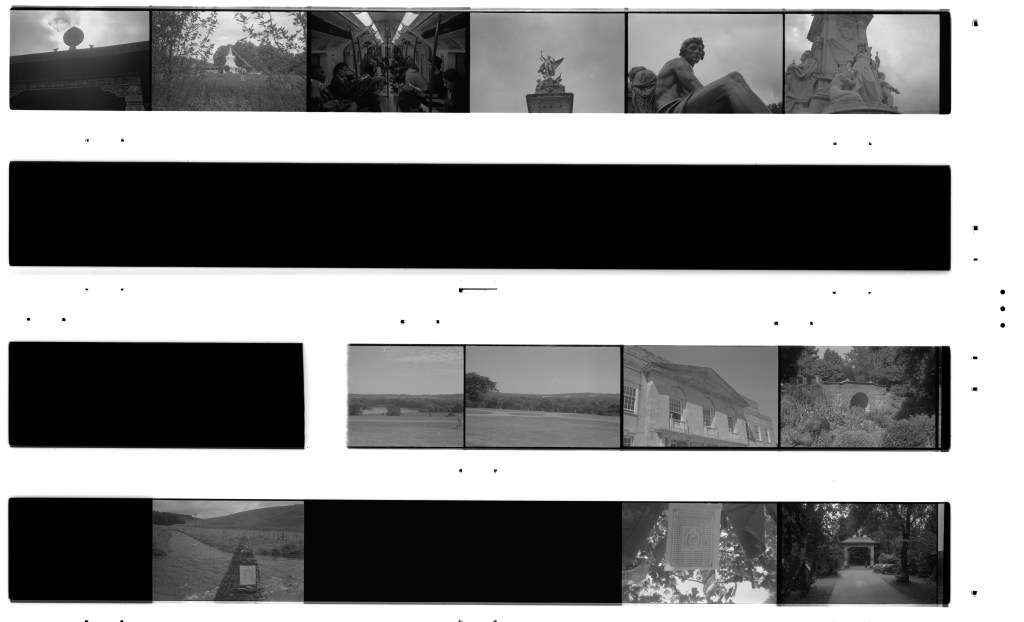
Film Processing

As part of my work on this module one of the metrics of success I set myself was to learn how to process my own film. After speaking about this with Tony he suggested I get in contact with Lisa, one of the technicians to see about getting involved with one of the BA Photo film processing inductions. I did this and was given the okay to join the induction.

I had a few rolls of ILFORD HP5+ from when I first started shooting with film that I foolishly didn’t label after shooting and so after a while had passed I had no idea what was on the film so I figured that it wouldn’t be much of a loss if something went wrong in my induction processing.

Making notes during the talk through for the processing, I then followed these notes and processed a roll of B+W film for the very first time. Straight away this opened up the possibilities for my shooting as I would now be able to process my own film allowing for an increase in image quality, tone and atmosphere that comes when using film over digital images.

Using ILFORD’s HP5+ emulsion, it was very easy to work with, with reasonable developing temperatures not too far off of room temperature and a developing time of around 12 minutes giving plenty of time for the developer to react with the film and produce some images.
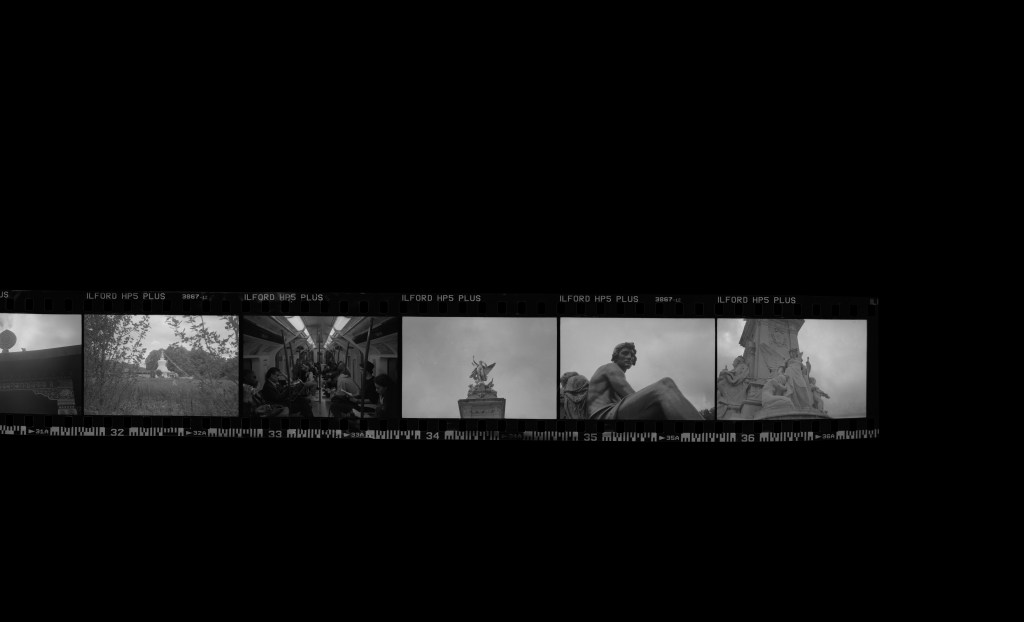
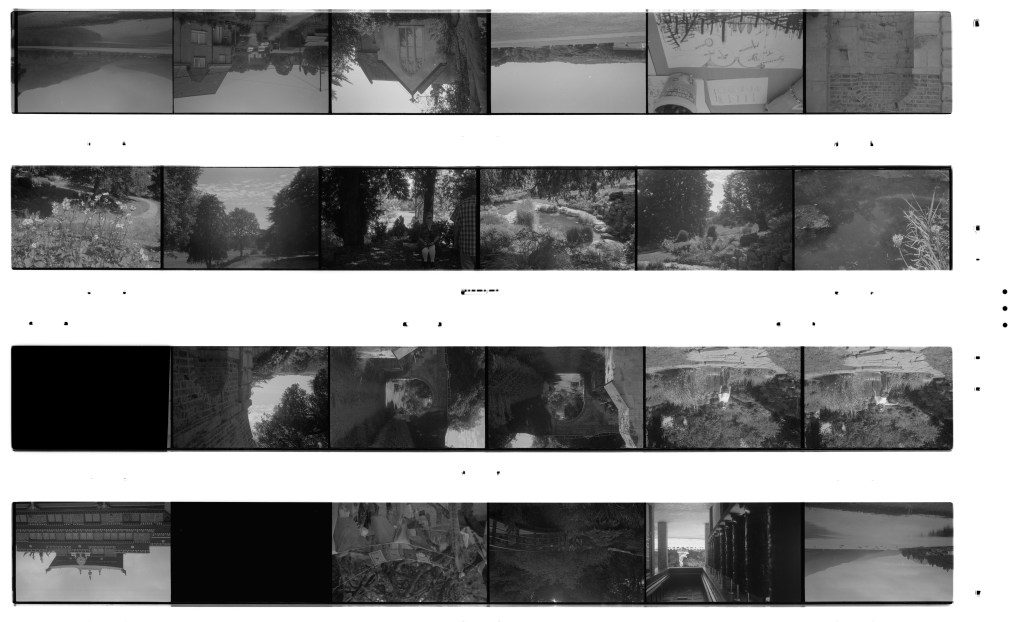
The agitation process became one that would improve as I gained more practice with developing and the nuance attached to the smaller details around the process. Upon speaking with fellow MA students and other photographers that dev their own film and gained some useful tips including gently lifting the edge of the processing tank to release any gas that may build up after agitation causing pressure to build and cause leaks of developer, not so much an issue when using relatively safer developers like XTOL but when using more harmful chemicals like Rodinol, it would be best to keep the solution contained in the processing tank.

Perhaps the hardest and most challenging aspect I found during the processing of film is the changing over from roll/cassette to the dev spools whilst in the dark changing room. With difficulty when using 35mm, the tension in the film strip causing it to roll up and coil in such a way that made it very difficult to handle carefully. 120 film is slightly easier to handle simply due to its larger width and less tightly wound rolls.

Over the course of this project and my photographic career, I will be processing many more rolls of film in a variety of methods and so I will be sure to develop my own methodology and process when it comes to film processing.  
Dev Blog, Shooting on Vintage Cameras

For this project, and most of my photographic work, I will be working with a selection of retro/vintage cameras that have been passed down to me from a relative from Uist who can no longer use them due to deteriorating eyesight. The cameras range from around 1920-1960, with a couple exceptions. They are mostly 120, medium format view/range finders, they shoot a mixture of 6×6 and 6×9 negatives which will allow me to capture some very detailed and create shots with that characteristic medium format depth.

The cameras in question are…

A Minolta Autocord TLR, 6×6, 1953-1966

A Zeiss Ikon Super Ikonta, Rangefinder, 6×9, 1952

A Voigtlander Vitomatic 1b, Viewfinder, 35mm, 1965

With my current project focusing heavily on the aesthetics of brutalism, I felt the vibe and style of images that these cameras produce would greatly benefit the timeless and stoic nature of the buildings that will be the focal point of the project.

Artist Research: Mark Rothko

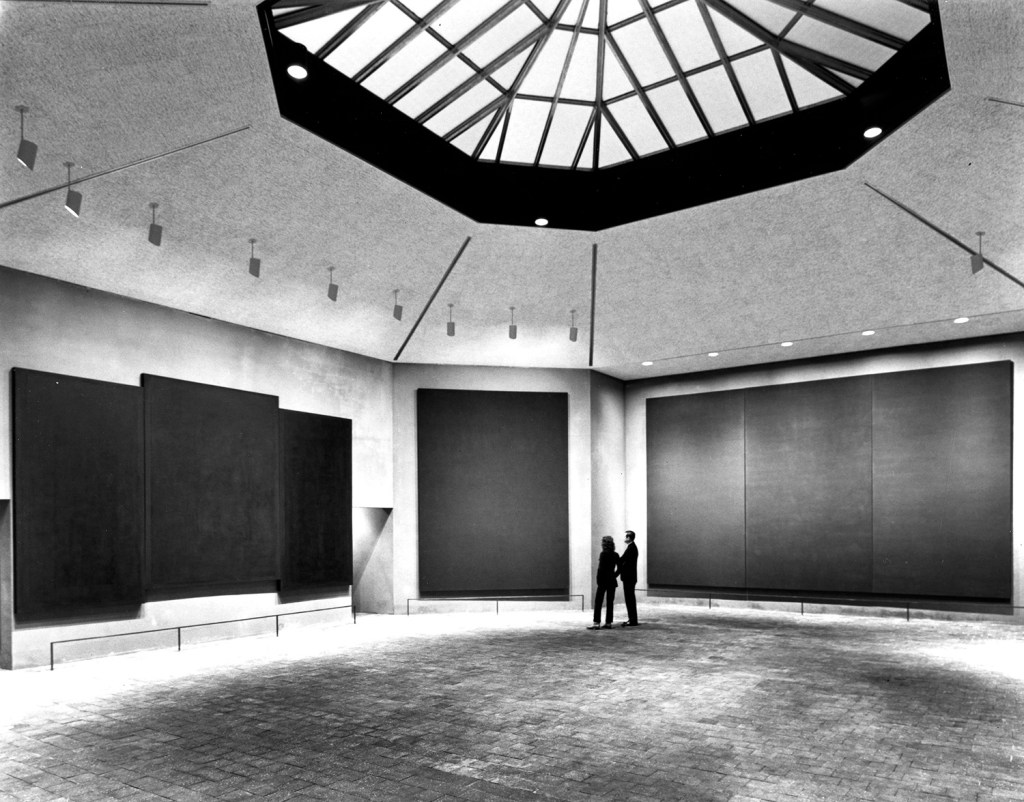
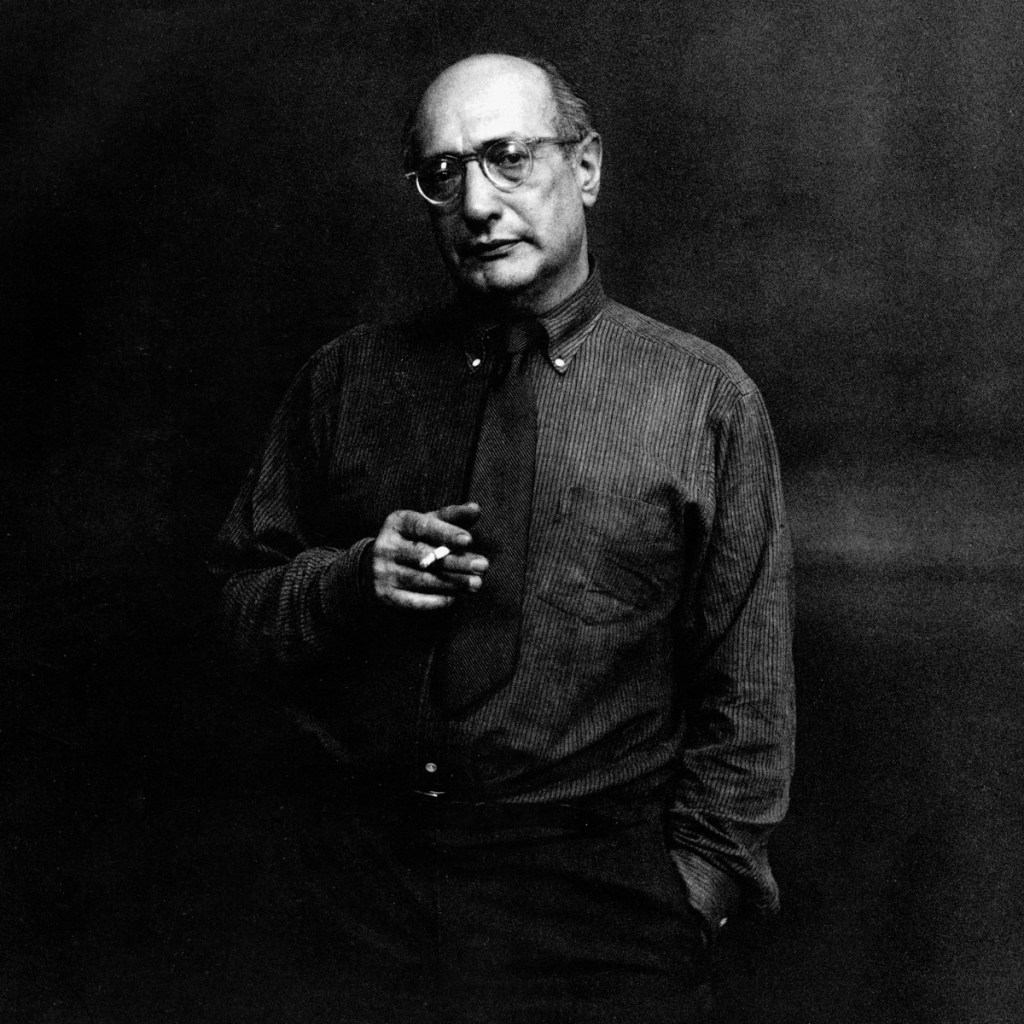
RUDOLPH BURCKHARDT, MARK ROTHKO, NEW YORK, 1960. ALBRIGHT-KNOX ART GALLERY / ART RESOURCE, NY

Mark Rothko, born 1903, an abstract expressionist active in the New York arts scene of the 1940’s, 50’s & 60’s who’s works had a heavy emphasis on colour, form and space.

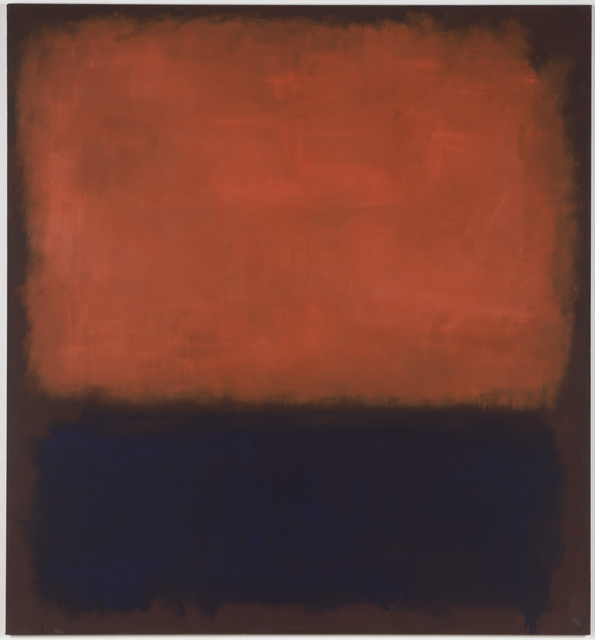
Number 14

Whilst categorized as being in the school of abstractionism and Colour field, Mark thoroughly objected the term, stating that he wanted to move beyond both classical and abstract art doctrines.

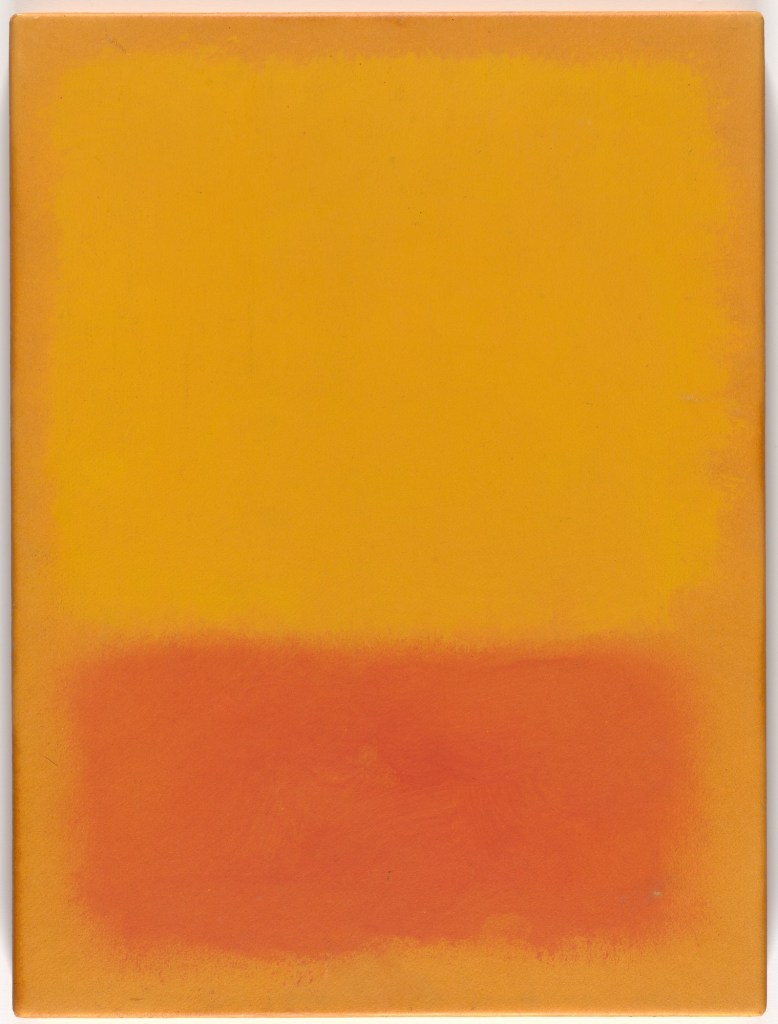
Untitled (Orange)

To Mark, his paintings had their own form and sense of space, they were not two dimensional pictures to be seen only on face value as studies in colour and shape. In his own words…

‘…the fact that a lot of people break down and cry when confronted with my pictures shows that I can communicate those basic human emotions … The people who weep before my pictures are having the same religious experience I had when I painted them. And if you, as you say, are moved only by their color relationship, then you miss the point.’

What has drawn me to the work of Mark Rothko is this sense of form and gravitas at an almost sentient level. Something that can only fully be experienced and felt over read or told about. It’s this sense of form that I believe to be true about brutalist architecture, and that is what I plan to capture and subsequently convey through my photography. There is also a stylistic similarity in the pieces themselves that evoke something similar to the coolness of poured concrete and large flat walls.

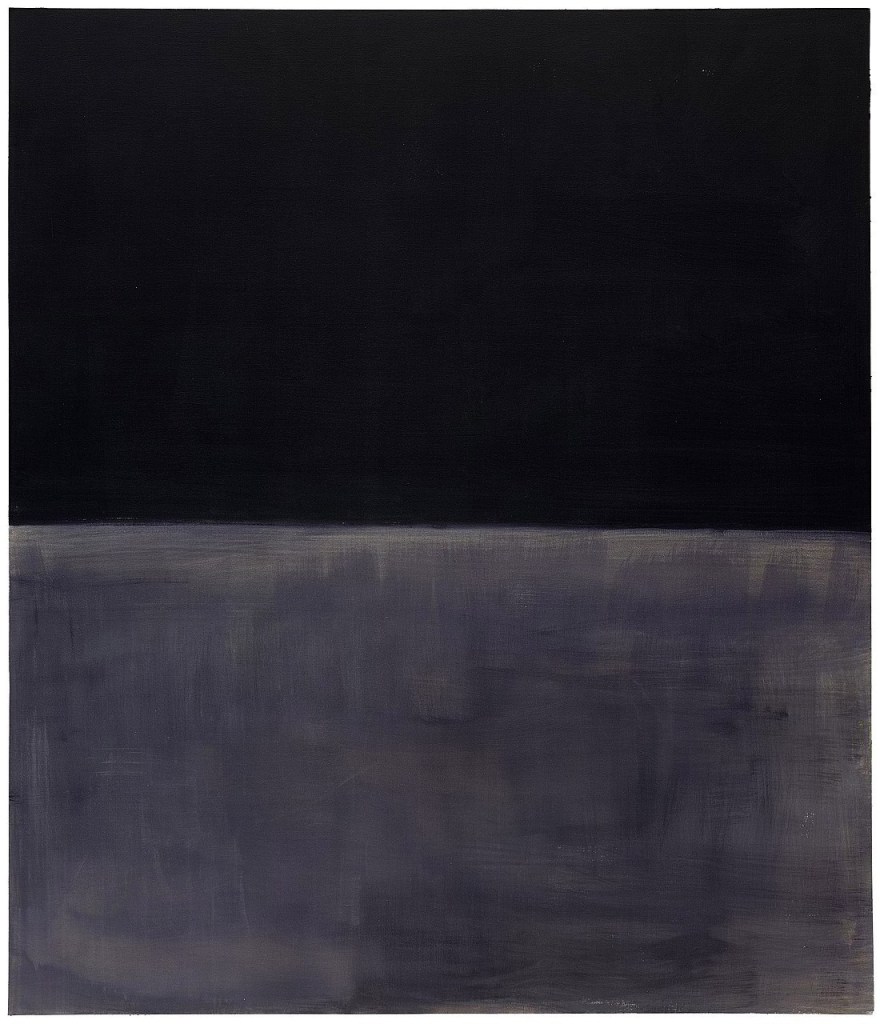
Untitled (Black on Grey)

I also plan to work in the style of Rothko on how to best convey and realise the all important sense of form, specifically, using scale and light. Rothko’s works varied in size but all were large, most paintings much taller than their intended audience. Many galleries can struggle to display a large number of his works simply due to a lack of a wallspace. His paintings are best viewed under ambiguous lighting, like that found in ‘Rothko’s Chapel’ (pictured below), where upon which the strong colour elements become abstracted from the background and that is where the core theme of that painting can be experienced.

Chapel interior, 1970’s

It is my plan to print my final images from this project large, maybe A1 or A0. Something that will need to be done digitally, for practical and logistical reasons. I would then ideally mount these on dark mountings and have them framed in strong black frames with adequate spacing between the print and the frame in order to not distract any form from the photographs. I would then hang these pieces just above eye level and angled slightly forwards, I would also experiment with lights and luminosity to try and emphasise the substance of form.

Artist Research: Hilla and Bernd Becher

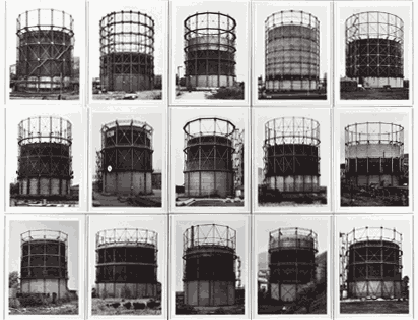
Gas Holders 1966-93
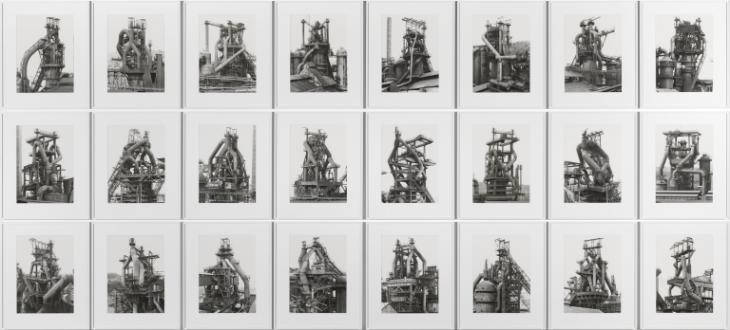
Blast Furnaces 1969-95
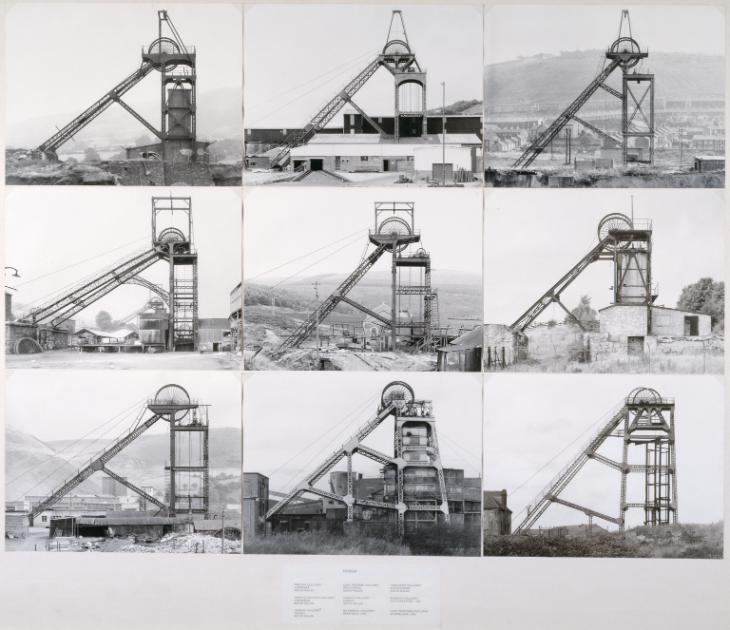
Pitheads 1974
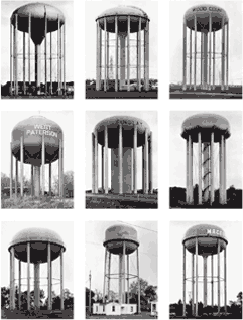
Water Towers 1988
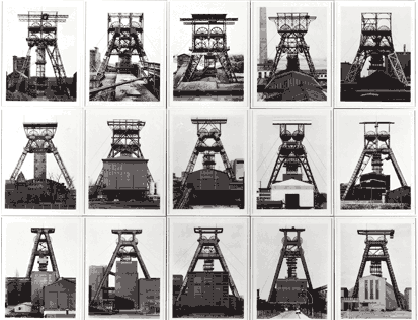
Winding Towers 1965-98

These works by the married duo of Bernd and Hilla Becher, both German photographers, are synonymous with the majority of the couples work. They like to photograph industrial areas, often specific pieces of industrial architecture such as pitheads, cooling towers, and oil refineries. An interesting working style is a key characteristic of their projects, photographing the same subject, in the same conditions, in an identical set-up to produce a series of images that present their object of focus free from any other influence in the scene.

Thematic Research: Trainyard Photoshoot

Continuing my research into the industrial aspect of the proposal, I researched abandoned/ disused spaces around the cheltenham area, a few results came back including a decommissioned stretch of railway leading to an abandoned trainyard. After finding a way to access the old line of the railway, we followed the tracks out of the station until we came across the first of the industrial railways cars, left here years ago, they’ve all rusted and weathered to varying degrees of severity. I wanted to capture the strength and form of these great steel mammoths as they lie dormant. The textures and atmospheres created by the cargo cars, to me had the same quality that I wish to capture in the submission pieces for the project.

TRAINYARD PHOTOS

https://drive.google.com/drive/folders/1znN3hNEUQmr_bBTpi3gHTFCR_W82T3RG?usp=sharing

Thematic Research – Brutalism

It’s very possible that no school of design has come under such unwarranted scrutiny, defamation and quite frankly, slander than that of Brutalism.

Brutalism, a school of architectural design that began in the 1950’s, evolving from the early 20th Century modernist movement of design. Large, Concrete and Blocky in nature, Brutalism relies heavily on the use of geometry and rigid forms to create spectacularly monolithic giants that tower over the landscape, standing out from the everyday and taking a firm step into the future.

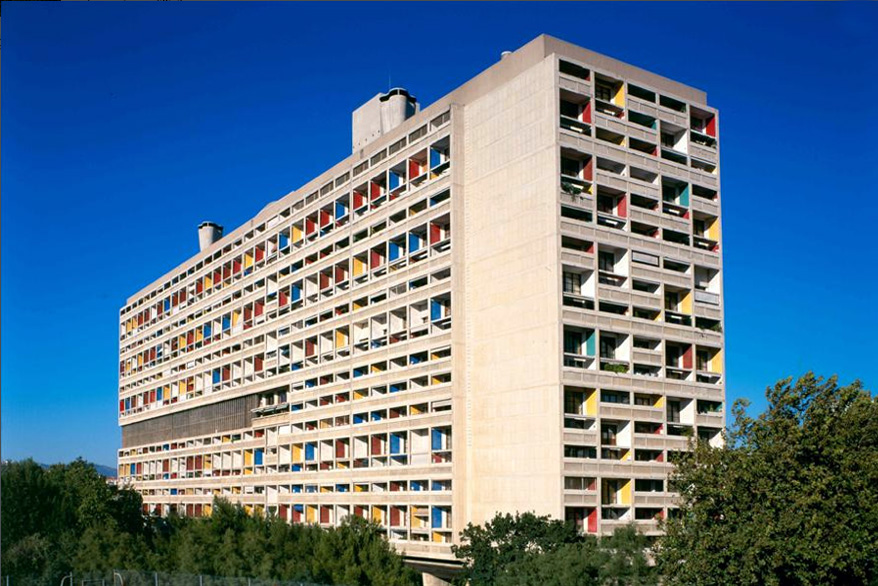
The term ‘Brutalism’ was coined by the British Architects, Alison and Peter Smithson but was made popular by the architectural historian, Reyner Banham in the mid 1950’s. The word itself is derived from the the French term, ‘Béton brut’ meaning raw concrete. Its first swarey into the world of architecture through French Architect Le Corbusier, the designer of the Cite Radieuse in Marseilles in the late 40’s

A “city within a city”, the iconic l’Unite d’Habitation, commonly known as La Cité Radieuse.

Brutalism sought to change the face of modern architecture by challenging existing ideas of what design projects should look like, how they should be constructed, even how they should be used. Brutalism found firm support in the socially progressive years from the late 50’s through to the late 1970’s before the rise of private enterprises meant that socially conscious housing and design was ditched in favour of high “luxury, financial profit and ultra-modernism. This however was not the end for brutalism, as the socialist ideals of the former USSR and Eastern Bloc allowed brutalism to thrive. Large, high-rise social housing projects like the Barbican Centre in London were a step forward from the traditional block housing estates, in that the goal was to create a self sufficient ‘city within a city’ by including basic amenities such as post offices, doctors surgeries, hairdressers, stores and many other traditionally high street enterprises would now be encapsulated in poured concrete and made into the very foundations of these new brutalist schemes, not only literally but socially too.

Establishing Practice – Proposal

MA Proposal

AD7801 Photography 1: Establishing Practice

Industrial Aesthetics (name pending)

mage result for brutalism

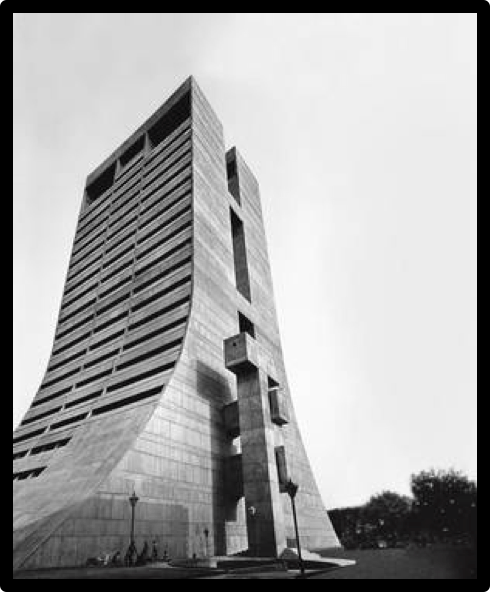
New Delhi Municipal Council Building, Kuldip Singh

| Photo Credit: MIT Libraries, Rotch Visual Collections, courtesy of Peter Serenyi

For this project, my aim is to capture the atmosphere that large, ominous, bleak, brutalist heavy engineering and Industry imposes upon the beholder; The awe-inspiring and/or bleak oppression of these monoliths. As part of this focus on Brutalist structures I will also be exploring the aesthetics, textures and impact of Industry. This might take the form of shots of…

  • Rusted metal/ machinery
  • Pylons
  • Heavily concreted areas
  • Foundries/ steelyards
  • Abandoned spaces/ areas

The monoliths in question will vary in their forms and functionalities wildly. Since I’m not approaching this project from a Documentary viewpoint on Industry or Brutalism, whatever and wherever I find the right atmosphere from an environment will be suitable for the project. I’ve begun my search for this atmosphere by sourcing some potential subjects…

  • Leckhampton Train Yard
  • Dowdeswell Reservoir
  • Gloucester Docks
  • Shipyards in Avonmouth, Bristol
  • Brutalist Sites in London, Barbican, NT, Tate Modern
  • Berkeley Site, Decommissioned Nuclear Plant

The methodology and equipment I use will make up a substantial amount of my own personal development as I aim to use equipment and techniques that will be pretty much entirely new to myself as a creative practitioner. These include but are not limited to…

  • Shooting Medium Format
    • 120 Film
    • Digital
  • Working more extensively with film
  • Developing my own film
    • 35mm
    • 120
  • Printing, Mounting and Display

I plan to print my final photos fairly large (A2/1) and mount these upon black backdrops, either fully or on a card mount. If I have the opportunity to display my photos, I will present them in an ambiguously lit environment and just above eye level in order to subtly maximise the imposing nature that the project intends to capture.

Throughout the progression of this project it is my hope that questions around multiple characteristics of the work will come to light, including…

  • Binary Opposition
  • Environmentalism
  • Sustainability
  • Existentialist Sentimentalities

The core of the project is something that I myself am aiming to be self-critical with as I feel that this atmosphere that I’m setting out to capture, is one that has always been present during my photographic progression as an incredibly indefinable sense of direction and as an aesthetic focus. I plan to use this project to further understand my own influences and drives as an emerging photographer.

Design a site like this with WordPress.com
Get started